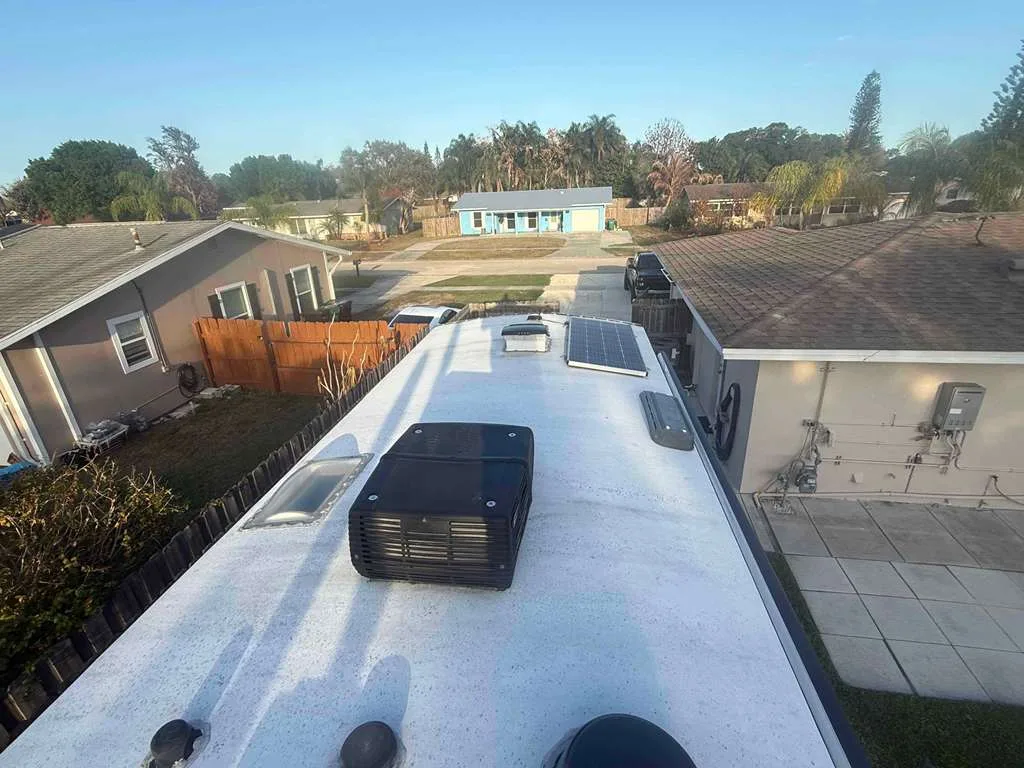
Your RV's rooftop AC unit runs harder on the Treasure Coast than almost anywhere in the country. From April through November, interior temperatures hit 130 degrees without cooling. That's 8 months of constant operation, with peak summer days pushing 14 hours of nonstop runtime. After 13 years and thousands of AC repair calls across St. Lucie, Martin, and Indian River counties, here's everything Danny Vasquez has learned about keeping your system alive through a Treasure Coast summer.
TL;DR
- Clean or replace your AC filter every 30 days in summer
- Check the run capacitor annually (the #1 failure point we see)
- Clean evaporator and condenser coils every 6 months
- Ensure 12+ inches of clear airflow around the rooftop unit
- Consider a soft-start device if you're on 30-amp hookups
- Run the fan continuously to dehumidify and prevent duct mold
- Call 772-677-1583 at the first sign of warm air or cycling issues
Why Treasure Coast AC Units Fail Faster
RV air conditioners on the Treasure Coast take a beating that units in Michigan or Colorado never experience. The math is simple: a unit running 10 to 14 hours daily for 8 months logs roughly 2,400 to 3,400 hours per year. Compare that to 600 to 800 hours in a northern climate. That's 3 to 4 times the wear on every component: the compressor, capacitor, fan motor, contactor, and thermostat. According to Dometic's engineering specifications, their rooftop units are rated for approximately 15,000 hours of operation. At Treasure Coast usage rates, that's 4 to 6 years of life without maintenance. With proper maintenance, you can stretch it to 8 to 12 years. The difference is whether you're paying $200 per year for maintenance or $2,500 for a premature replacement.
The #1 Failure Point: Run Capacitors
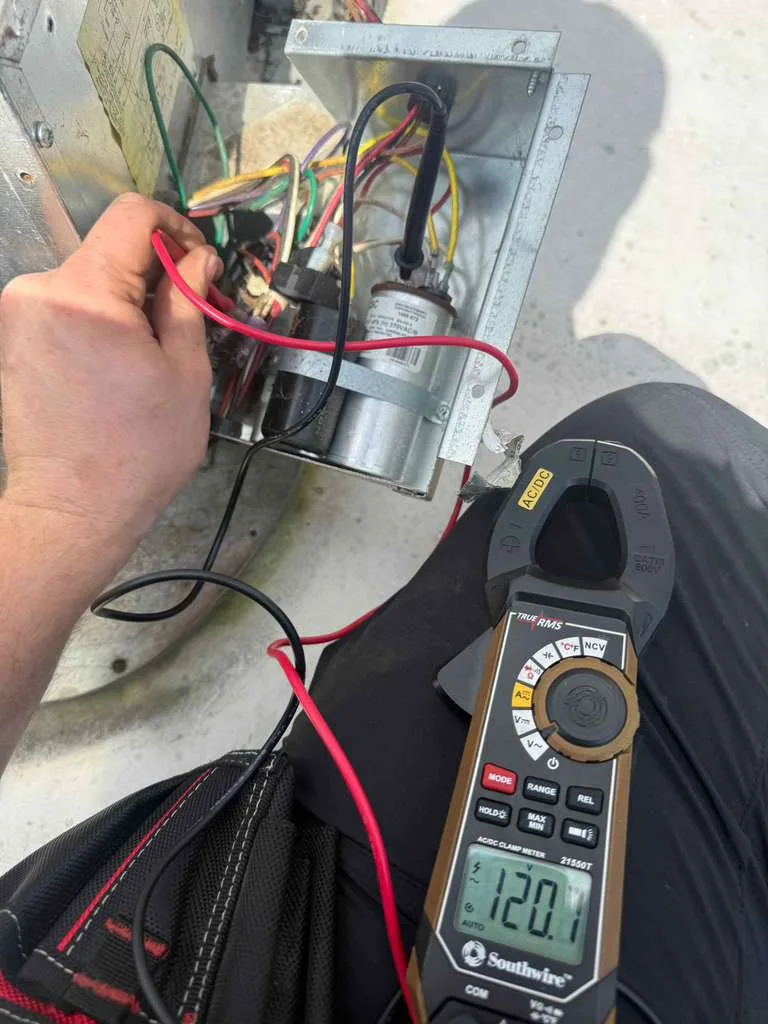
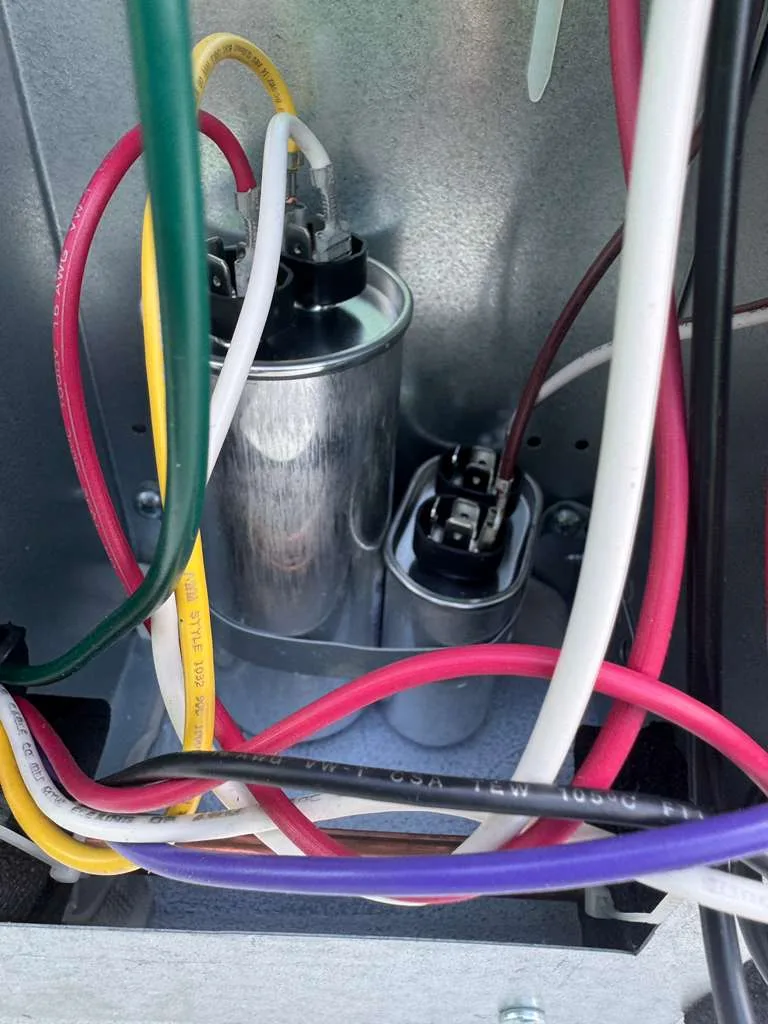
We replace more run capacitors than any other AC component between May and October. A capacitor is a small cylindrical device that stores electrical charge to start and run the compressor motor. They cost $12 to $25 for the part itself. But when one fails, your compressor either won't start at all or will cycle on and off rapidly, which can overheat and destroy the compressor motor (a $600 to $1,200 replacement). Florida's sustained heat causes capacitors to swell and lose capacitance over time. We recommend checking your capacitor value with a multimeter every spring. If it's reading more than 10% below its rated microfarads, replace it. A $120 to $200 service call to replace a capacitor can save you $1,500 or more in compressor damage. We stock the most common capacitor values on every truck.
Monthly Filter Maintenance
This is the single most impactful thing you can do for your AC. A clogged filter restricts airflow across the evaporator coil, which does three things: it reduces cooling output by up to 25%, forces the compressor to work harder and run hotter, and can cause the evaporator coil to freeze up. In Florida, where pollen counts stay high from February through November and humidity pushes dust and mold spores into your air intake, filters clog roughly twice as fast as in drier climates. Pull the filter from the ceiling shroud monthly. Wash it with warm water and mild dish soap, let it air dry completely, and reinstall. If the filter material is thinning or torn, replace it. Dometic and Coleman replacement filters cost $10 to $15 at any RV supply store. This 10-minute task is the cheapest AC maintenance you can do.
Coil Cleaning: Every 6 Months in Florida
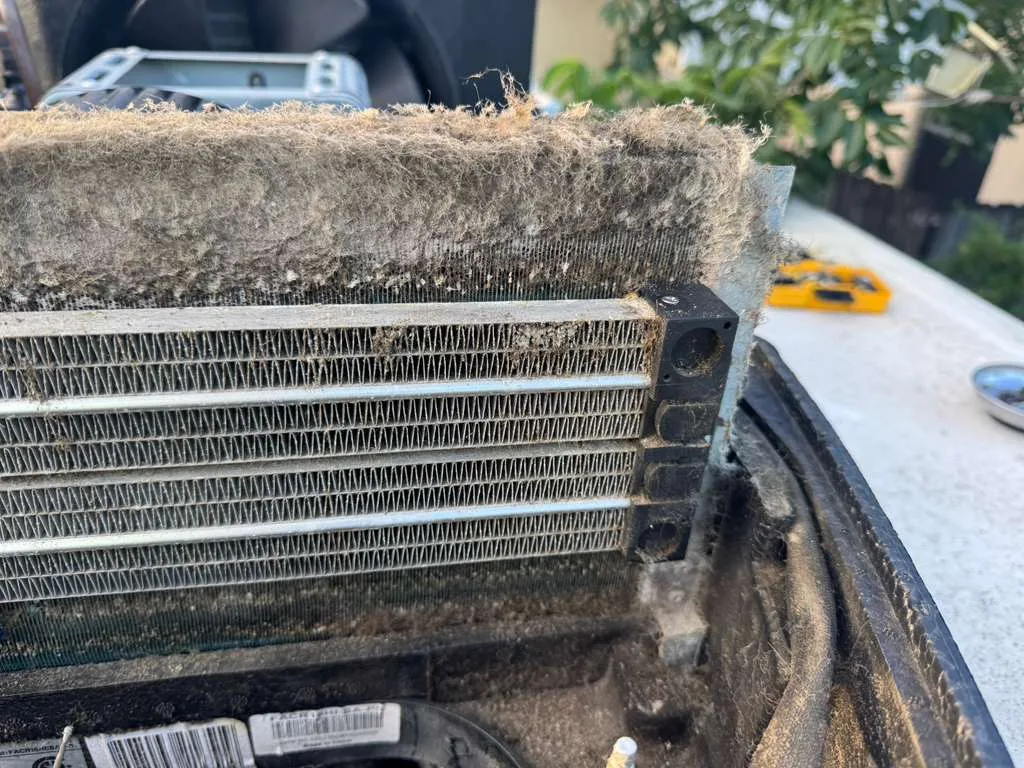
Your AC has two coil sets: the evaporator coil inside (behind the filter) and the condenser coil outside (on the roof). Both collect dirt, pollen, salt residue from coastal air, and biological growth from Florida's humidity. Dirty coils act as insulation, preventing heat transfer and forcing the system to work 20 to 30% harder. Per Dometic's service manual, coils should be cleaned annually in standard climates and every 6 months in high-use coastal environments. For the condenser coils on the roof, turn off the AC completely, remove the shroud, and gently spray the coils with a garden hose at low pressure. Never use a pressure washer as this bends the delicate aluminum fins. For the evaporator coil inside, use a foaming coil cleaner from an HVAC supply store. Spray it on, let it foam and drip into the condensate pan, then wipe clean. While you're at it, check the condensate drain line. In Florida, algae and mold frequently clog this drain, causing water to drip inside the RV.
The Soft-Start Solution
If you're on a 30-amp hookup (which is most campground sites on the Treasure Coast), starting your AC compressor creates a surge of 30 to 45 amps for about half a second. That's enough to trip a 30-amp breaker, especially if you have any other loads running. A soft-start device (like the Micro-Air EasyStart or SoftStartRV) reduces that startup surge to about 18 amps by gradually ramping up the compressor. This means you can start your AC while running other appliances on 30-amp, run your AC from a smaller portable generator, and even run two ACs on 50-amp that would previously trip. We install soft-start devices for $200 to $350. It's one of the best quality-of-life upgrades for Treasure Coast RV owners.
Continuous Fan Mode: Your Secret Weapon
Most RV thermostats have an AUTO and a FAN (or ON) setting. In AUTO, the fan only runs when the compressor is actively cooling. In FAN or ON mode, the fan runs continuously even when the compressor cycles off. In Florida's humidity, running the fan continuously is significantly better because it keeps air moving across the evaporator coil, which continues to dehumidify even when the compressor isn't running. It prevents moisture from pooling in the ductwork, which is where mold colonies establish between compressor cycles. It maintains more even temperatures throughout the RV instead of the hot-cold-hot cycle of AUTO mode. The fan motor draws about 0.5 amps, so the energy cost is negligible compared to the mold prevention and comfort benefits.
When to Call a Professional
If your AC is blowing air but it's not cold and the filter is clean, it's time to call. The issue is likely electrical (capacitor, contactor, or fan motor), refrigerant-related (leak and low charge), or mechanical (compressor failure). Don't try to diagnose refrigerant issues yourself. RV AC systems are sealed, and incorrect refrigerant charging damages the compressor permanently. Call 772-677-1583 and describe the symptoms. We can usually narrow down the likely cause over the phone and arrive with the right parts for a same-day repair.
Related Resources
Questions about this topic? Call 772-677-1583 and ask for Danny. We're happy to talk it through before scheduling anything.